
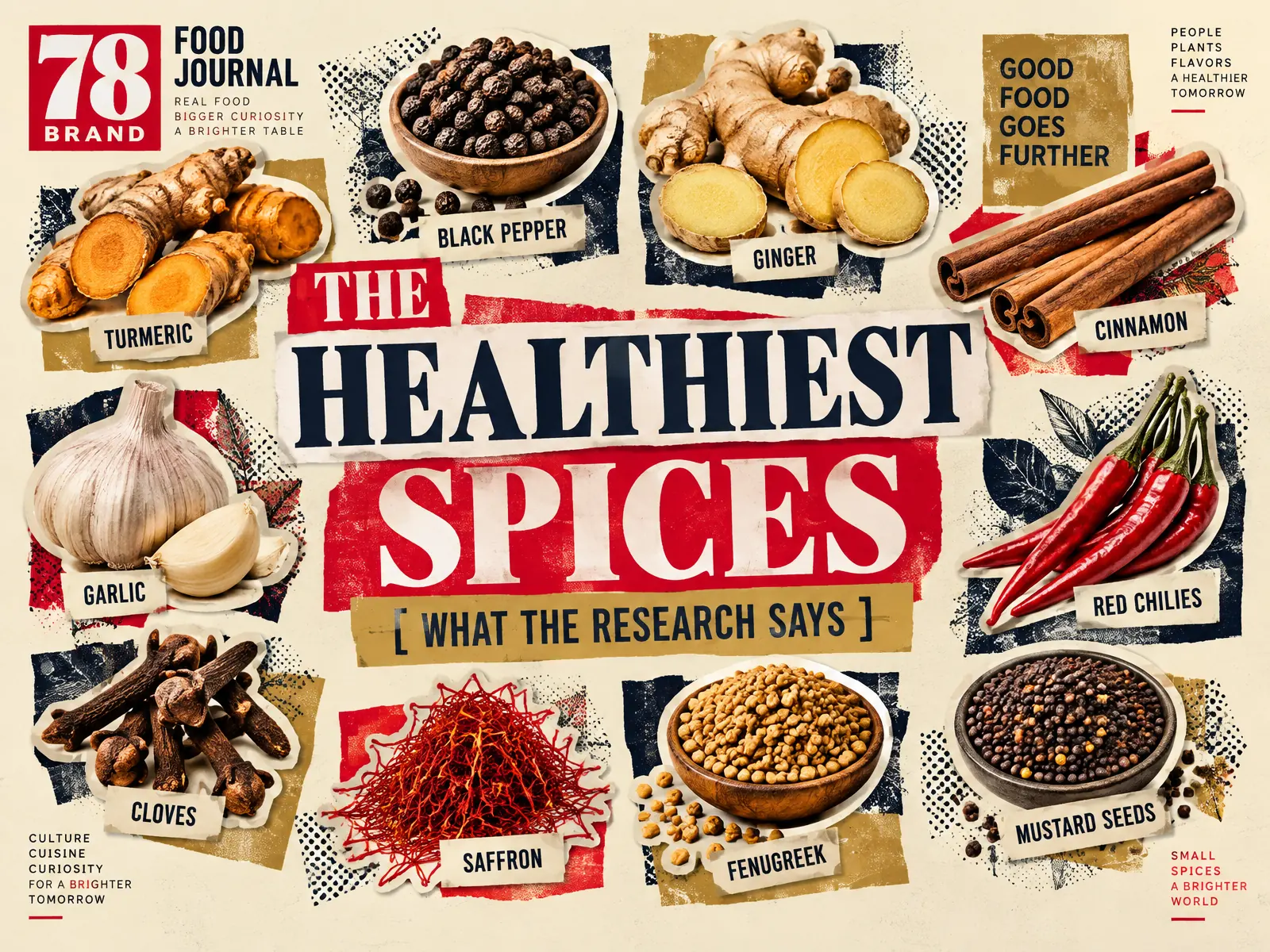
Open any spice drawer and you are looking at a medicine cabinet from another century. Turmeric, ginger, and garlic were prescribed long before they were seasoning. Pepper was worth its weight in silver. Cloves were packed for toothaches.
Today most of us reach for them because dinner needs them. That is reason enough. But the old reputation raises a fair question. Do the healthiest spices actually do anything for us, or is that just folklore with a nice label?
The honest answer sits in the middle. Researchers have studied all ten spices below, some of them for decades. A few have solid human evidence behind specific uses. Most have promising lab results and modest or mixed results in people. None of them cures anything. Here is what the research says about each one, in plain language, with the sources so you can check for yourself.
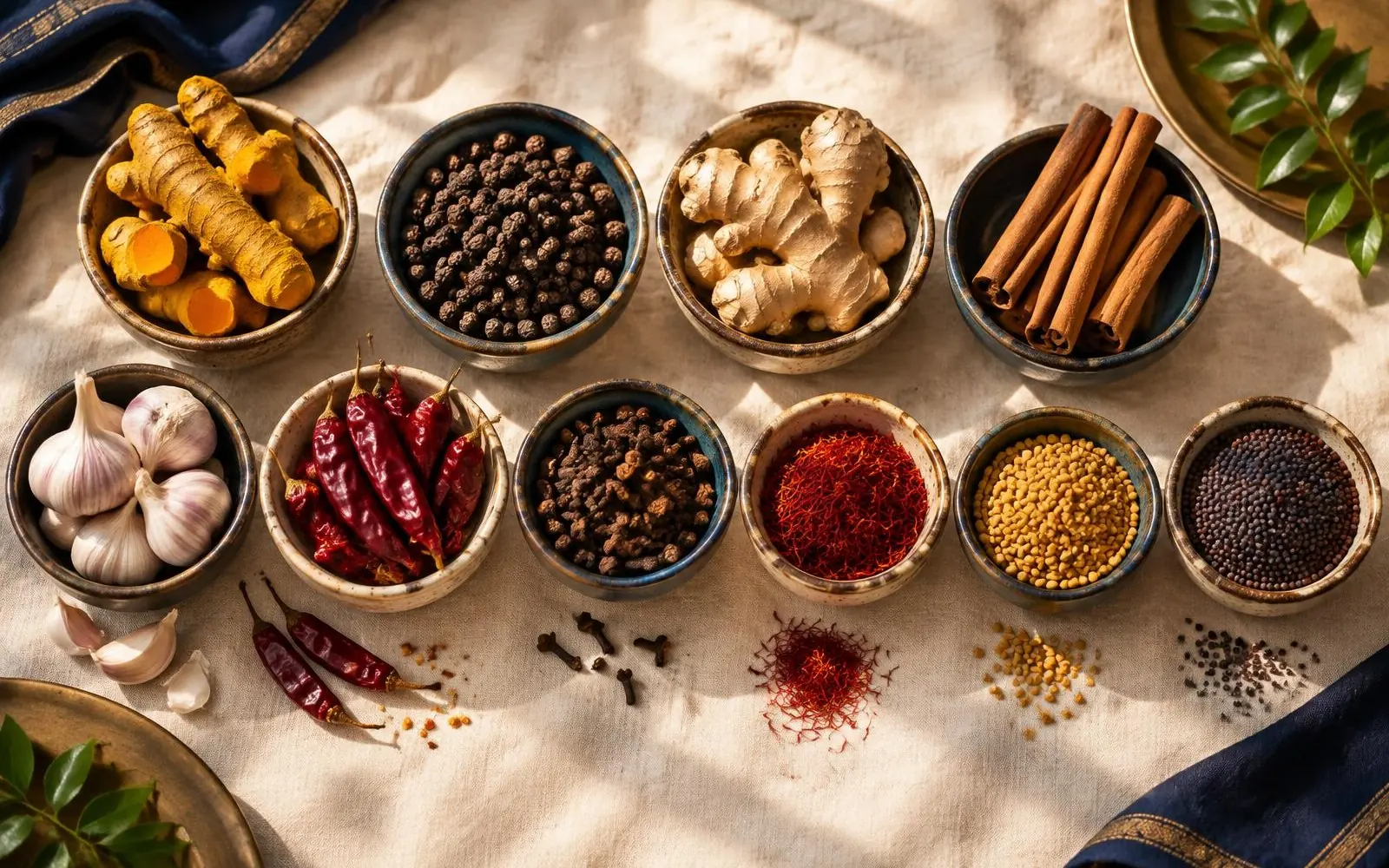
Read this first: a sprinkle is not a supplement
Most studies on the health benefits of spices test concentrated extracts or supplements, often in doses far larger than anything you would cook with. A teaspoon of turmeric in a curry is not the same thing as a 500 mg curcumin capsule.
So think about spices the way a good cook does. Use them generously, often, and in variety. Let them carry flavor that would otherwise come from extra salt, sugar, or heavy sauces. That swap alone is a real benefit, and it needs no clinical trial to prove it.
If you are considering spice supplements, talk to your doctor first. Several of them interact with common medications, and we flag the big ones at the end.
Spices were medicine before they were flavor
The oldest surviving medical texts read like spice lists. The Ebers Papyrus, written in Egypt around 1550 BCE, records hundreds of plant remedies, with garlic among them. Traditional Indian medicine has used turmeric, ginger, and pepper for thousands of years. For most of human history, the line between the kitchen and the apothecary was thin, and often it did not exist at all.
We tell that full story, from cure to flavor, in A Short History of Spices. For now, here are the ten spices with the most research behind them.
1. Turmeric
The golden root behind curry's color, and the spice with the most research attention on this list. Its best-known compound is curcumin.
What the research says: A lot has been studied. Less has been proven than the headlines suggest. The National Center for Complementary and Integrative Health (NCCIH), part of the NIH, says there is not enough evidence to conclude that turmeric or curcumin helps with any specific health condition overall. There is one bright spot. A 2021 systematic review of 10 studies with 1,287 participants found turmeric may ease knee osteoarthritis pain and improve function about as well as common anti-inflammatory drugs. Researchers also note that curcumin is poorly absorbed on its own, which is where the next spice comes in.
How to use it: Warm it in a little oil before adding liquid, and pair it with black pepper. We explain why that pairing matters in Turmeric and Black Pepper: Why This Old Pairing Works.
2. Black pepper
Once called the king of spices, and the most traded spice in history. Its sharp bite comes from a compound called piperine.
What the research says: Pepper's most famous trick is helping other compounds get absorbed. In a small study published in Planta Medica in 1998, volunteers who took 2 grams of curcumin together with 20 mg of piperine had curcumin blood levels about 2,000% higher than with curcumin alone. That was a supplement-dose study, but it is the reason turmeric and black pepper show up together so often, in curries and in capsules alike.
How to use it: Grind it fresh. Pre-ground pepper loses its aroma fast, and freshly cracked pepper gives you more flavor for less.
3. Ginger
A knobby root with a bright, warming bite, used in cooking and medicine across Asia for thousands of years. Its main active compounds are called gingerols.
What the research says: Ginger's best-supported use is nausea, with real limits. NCCIH says ginger may help with mild nausea and vomiting during pregnancy. For nausea from cancer chemotherapy, a 2019 review of 18 studies with more than 1,600 participants found mixed results. And despite its reputation, there is no strong evidence that ginger helps with motion sickness. Side effects are usually mild: heartburn, gas, or an upset stomach in some people.
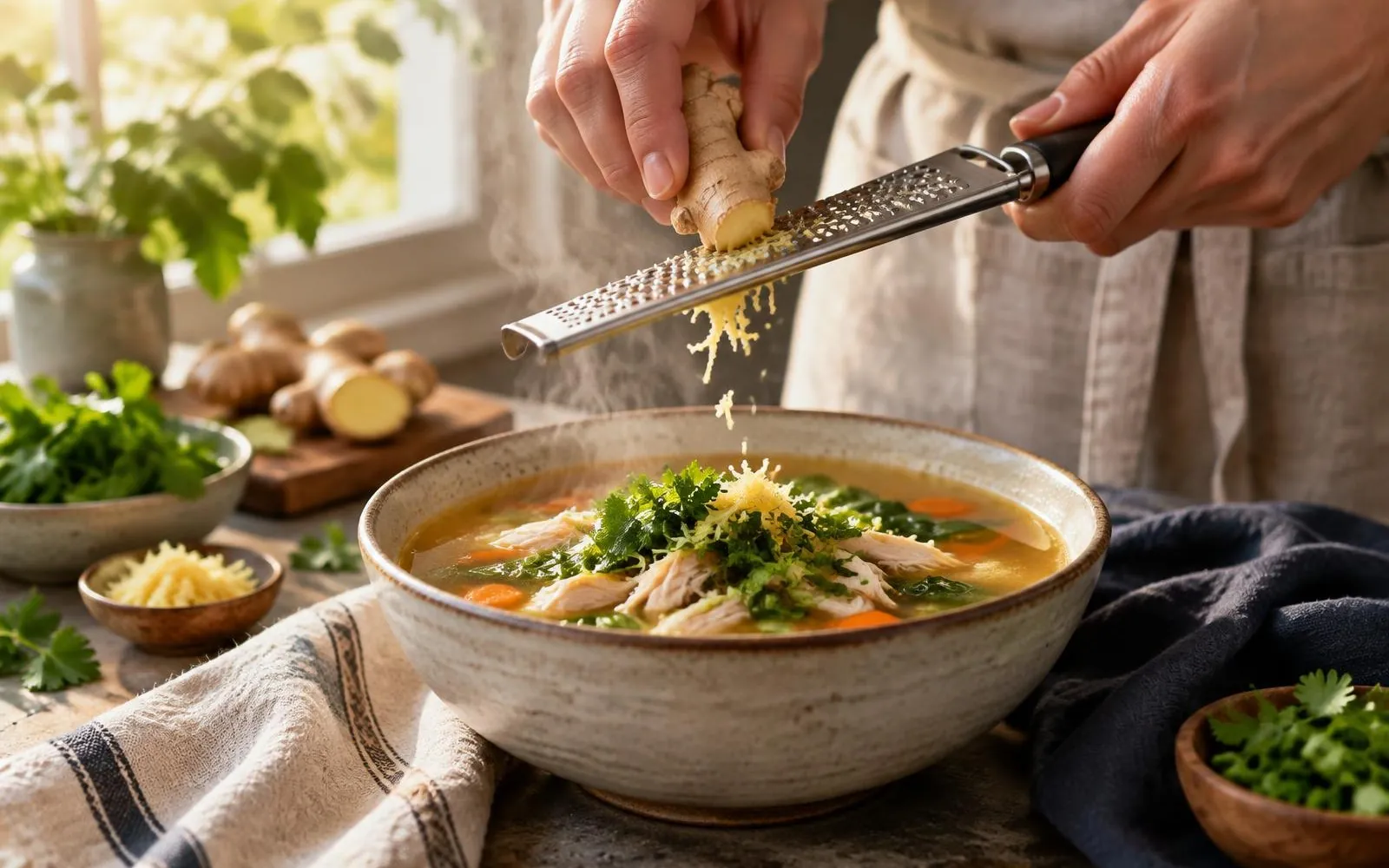
How to use it: Grate fresh ginger into stir-fries, soups, and hot water with lemon. Fresh ginger tastes brighter. Ground ginger tastes warmer and works better in baking.
4. Cinnamon
The inner bark of a tropical tree, rolled into quills as it dries. Two kinds dominate: cassia, the most common in American stores, and Ceylon, sometimes called true cinnamon.
What the research says: Cinnamon is best known for a possible effect on blood sugar, and the evidence conflicts. NCCIH points to a 2012 Cochrane review that found insufficient evidence for cinnamon in diabetes, and a 2019 analysis of 16 studies that found it lowered fasting blood sugar but not HbA1c, the longer-term marker doctors watch. The studies vary so much in dose, length, and design that no clear conclusion is possible yet.
One safety note. Cassia contains coumarin, which in large amounts may cause or worsen liver problems. Normal cooking amounts are generally fine. If you use a lot of cinnamon every day, Ceylon contains only trace amounts.
How to use it: Oatmeal, coffee, chili, and roasted squash. Cinnamon adds a sense of sweetness, which makes it easy to use a little less sugar.
5. Garlic
Technically a bulb, but garlic lives in every spice drawer as powder, flakes, and granules, and in every kitchen as fresh cloves.
What the research says: Garlic has been studied mostly for heart health, and the results are modest. NCCIH says limited evidence suggests garlic supplements may lower blood pressure slightly in people who have high blood pressure, and may modestly lower cholesterol when taken for more than two months. Those effects are small next to prescription medication, and there is no evidence that garlic supplements prevent heart disease.
How to use it: Crush or chop fresh garlic and let it sit a few minutes before it hits the heat. Crushing sets off the reaction that creates allicin, the compound behind garlic's smell and much of its studied activity.
6. Cayenne and chili peppers
The only spices on this list that came from the Americas. Their heat comes from capsaicin, which triggers the same nerve receptors that sense temperature. That is why spicy food feels, quite literally, hot.
What the research says: In 2020, researchers presented a meta-analysis to the American Heart Association covering four large studies and more than half a million people. People who ate chili peppers most often had a 26% lower relative risk of dying from cardiovascular disease, 23% lower from cancer, and 25% lower from any cause, compared with people who rarely or never ate them. The key word is association. These were observational studies, and the researchers were careful to say they do not prove chili peppers caused the difference. Separately, capsaicin is the active ingredient in some over-the-counter pain relief creams.
How to use it: Start small and build. Heat you can taste through a whole bite beats heat that knocks you flat. It is why we make our 78 Spicy Ketchup and 78 Spicy Mustard with real peppers.
7. Cloves
Dried flower buds from a tree native to the Maluku Islands of Indonesia, once so valuable that nations fought over them. Their warm, slightly numbing flavor comes from a compound called eugenol.
What the research says: In the lab, cloves are a standout. Studies find strong antioxidant activity and broad antibacterial effects, largely credited to eugenol. Eugenol has also been used in dentistry for generations, which is where the old clove-for-a-toothache remedy comes from. Human trials on eating cloves are scarce, so treat the lab results as interesting rather than proven.
How to use it: A few whole cloves go a long way in rice, glazed ham, mulled cider, and spice rubs. Clove oil is far more concentrated than the whole spice and is not meant to be swallowed in large amounts.
8. Saffron
The hand-picked threads of a crocus flower, and by weight the most expensive spice in the world. It takes tens of thousands of flowers to make a single pound.
What the research says: Saffron has some of the more interesting human research on this list, mostly around mood. Earlier meta-analyses of randomized trials found saffron extract improved symptoms of mild to moderate depression compared with placebo. A 2024 meta-analysis of 8 studies, published in Nutrition Reviews, found no significant difference between saffron and common antidepressants (SSRIs) in reducing symptoms, with fewer side effects in the saffron groups. These studies use standardized extracts, not a pinch in paella, and they are not a reason to stop or swap any medication. That conversation belongs with your doctor.
How to use it: Steep a few threads in warm water or broth for about 10 minutes before adding them. A little colors and scents an entire pot.
9. Fenugreek
Small, golden seeds with a flavor somewhere between celery and maple syrup. Fenugreek is even used to make imitation maple flavoring.
What the research says: NCCIH considers fenugreek safe in the amounts found in food. It has been studied for blood sugar and for breast milk supply. Results for milk supply are mixed, and research on blood sugar is ongoing. One important caution: fenugreek is not considered safe during pregnancy in amounts greater than those found in food, because it has been linked to birth defects.
How to use it: Toast the seeds lightly in a dry pan for dals, curries, and spice blends. Watch them closely. Fenugreek turns bitter if it burns.
10. Mustard seed
Our home turf. Mustard seed comes from three plants, yellow, brown, and black, all cousins of broccoli and cabbage. Like those vegetables, mustard seeds carry compounds called glucosinolates.
What the research says: Lab and animal studies credit mustard's glucosinolates, such as sinigrin, with antioxidant and anti-inflammatory activity. The most useful human finding is a kitchen trick. Broccoli contains a compound that becomes sulforaphane, one of the most studied plant compounds in nutrition research, but only with help from an enzyme that cooking destroys. Mustard seed carries that same enzyme. In a 2018 study of 12 adults, adding 1 gram of powdered brown mustard to cooked broccoli made sulforaphane more than four times as available as eating the broccoli on its own.
How to use it: Sprinkle a little ground mustard powder over cooked broccoli, cabbage, or Brussels sprouts. The study used raw mustard powder, and the effect depends on that enzyme staying intact, so this is a job for the powder in your spice drawer. For everything else mustard does, our field guide to every type of mustard has you covered.
Honorable mentions
Rosemary. Rich in antioxidant compounds. Studies have found that rosemary in marinades can reduce some of the harmful compounds that form when meat is grilled at high heat.
Oregano. In a well-known Cornell study of traditional recipes from 36 countries, oregano was one of a handful of spices that inhibited every type of bacteria it was tested against. It is a lab finding, but a striking one.
Cardamom. A pillar of traditional medicine in South Asia and the Middle East, used for digestion for centuries. Human research is still thin.
How to get more spice into everyday meals
You do not need a supplement aisle. You need a few habits.
- Let spice replace some salt. Garlic, pepper, cumin, and chili bring flavor that makes a lower-salt dish taste finished.
- Pair turmeric with black pepper and a little fat. It is how cooks have done it for centuries, and the research agrees.
- Crush garlic, then wait. A few minutes on the cutting board before cooking.
- Dust cooked greens with mustard powder. The broccoli trick above works for most of its cousins.
- Toast whole spices. A minute in a dry pan wakes up cumin, coriander, fenugreek, and mustard seed.
- Replace ground spices yearly. Flavor fades on the shelf. If a spice does not smell like much, it will not taste like much.
Safety: what to know before you go beyond the kitchen
Spices in cooking amounts are safe for nearly everyone. Supplements are a different category, and a few cautions come up again and again in the research:
- Blood thinners. Garlic, ginger, and turmeric supplements may affect bleeding and interact with blood-thinning medication. Tell your doctor before taking them.
- Pregnancy. Fenugreek beyond food amounts is not considered safe during pregnancy.
- Your liver. Highly absorbable curcumin formulations may harm the liver, and large daily amounts of cassia cinnamon carry a coumarin risk.
- Medication swaps. No spice replaces a prescribed medication. The saffron and garlic studies above are not a reason to change your treatment.
Frequently asked questions
What is the healthiest spice?
No single spice wins. Turmeric has the most research. Ginger has one of the best-supported specific uses, for mild nausea in pregnancy. Chili peppers have some of the most striking population data. Cooking with a variety of spices, often, beats betting on any one of them.
Which spices are anti-inflammatory?
Turmeric, ginger, cinnamon, cloves, and rosemary are the spices most often studied for inflammation. The strongest human evidence is for turmeric in knee osteoarthritis. Much of the rest comes from lab studies, so treat "anti-inflammatory" as promising rather than proven. We go deeper in Anti-Inflammatory Spices: What the Science Supports.
Why do people eat turmeric with black pepper?
Curcumin, the main compound in turmeric, is poorly absorbed on its own. A 1998 study found that piperine from black pepper raised curcumin levels in the blood about 2,000%. Cooks in India paired the two long before anyone measured it.
Can spices replace medicine?
No. Some spices have encouraging research behind specific uses, but none has been shown to cure or treat disease the way medication does. Talk to your doctor before using any spice as a supplement.
How much of a spice should I eat for health benefits?
There is no official daily amount for any spice. Most research doses are concentrated supplements. For everyday eating, the best advice is simple: cook with a variety of spices, often, and let them do some of the work salt and sugar used to do.
The bottom line
The healthiest spices are not miracle cures, and the honest research says so. They are something better for everyday life: small, affordable, delicious ways to eat a little better at every meal. People understood that thousands of years before anyone ran a trial.
Spice, the 78 way
The 78 team believes food is one of the most important tools we have for taking care of our bodies, and that a lot of it starts with gut health. Spices have been used for generations, not only to flavor food but to support the body, and we think they belong in your daily diet: in your eggs, on your salads, even in your drinks. Just know your spices. Every body processes food differently, so learn which ones work for you and which ones your body does not need.
That thinking shows up in what we make:
- 78 Yellow Mustard is mustard-seed rich, and its yellow comes from the seed itself, not a dye.
- 78 Spicy Mustard gets its warmth from real peppers.
- 78 Spicy Ketchup layers real peppers over a 78% tomato base.
- 78 Original Ketchup keeps it simple: 78% tomatoes and real sugar.
78 spices are coming soon. We are bringing the same real-ingredient approach behind our ketchup and mustard to a line of spices, under the 78 Brand umbrella.
Sources
This article is for general information and is not medical advice. Talk with your doctor or pharmacist before taking any herbal supplement, especially if you are pregnant, nursing, or take prescription medication.
- NCCIH, Turmeric: Usefulness and Safety. https://www.nccih.nih.gov/health/turmeric
- NCCIH, Nutritional Approaches for Musculoskeletal Pain: What the Science Says (2021 turmeric and knee osteoarthritis review). https://www.nccih.nih.gov/health/providers/digest/nutritional-approaches-for-musculoskeletal-pain-and-inflammation-science
- Shoba G. et al. (1998). Influence of piperine on the pharmacokinetics of curcumin in animals and human volunteers. Planta Medica 64:353-356. https://doi.org/10.1055/s-2006-957450
- NCCIH, Ginger: Usefulness and Safety. https://www.nccih.nih.gov/health/ginger
- NCCIH, Cinnamon: Usefulness and Safety. https://www.nccih.nih.gov/health/cinnamon
- NCCIH, Type 2 Diabetes and Dietary Supplements: What the Science Says. https://www.nccih.nih.gov/health/providers/digest/type-2-diabetes-and-dietary-supplements-science
- NCCIH, Garlic: Usefulness and Safety. https://www.nccih.nih.gov/health/garlic
- American Heart Association, People who eat chili pepper may live longer? (2020). https://newsroom.heart.org/news/people-who-eat-chili-pepper-may-live-longer
- Pharmacological Properties and Health Benefits of Eugenol: A Comprehensive Review (PMC). https://pmc.ncbi.nlm.nih.gov/articles/PMC8357497/
- Saffron versus SSRIs in depression and anxiety: meta-analysis of randomized controlled trials, Nutrition Reviews (2024). https://pubmed.ncbi.nlm.nih.gov/38913392/
- Saffron and major depressive disorder: a meta-analysis of randomized clinical trials. https://pubmed.ncbi.nlm.nih.gov/24299602/
- NCCIH, Fenugreek: Usefulness and Safety. https://www.nccih.nih.gov/health/fenugreek
- Sinigrin and Its Therapeutic Benefits (PMC). https://www.ncbi.nlm.nih.gov/pmc/articles/PMC6273501/
- Okunade O. et al. (2018). Supplementation of the diet by exogenous myrosinase via mustard seeds to increase the bioavailability of sulforaphane in healthy human subjects after the consumption of cooked broccoli. Molecular Nutrition & Food Research. https://onlinelibrary.wiley.com/doi/10.1002/mnfr.201700980
- Billing J., Sherman P.W. (1998). Antimicrobial functions of spices: why some like it hot. The Quarterly Review of Biology 73(1):3-49. https://www.journals.uchicago.edu/doi/abs/10.1086/420058