
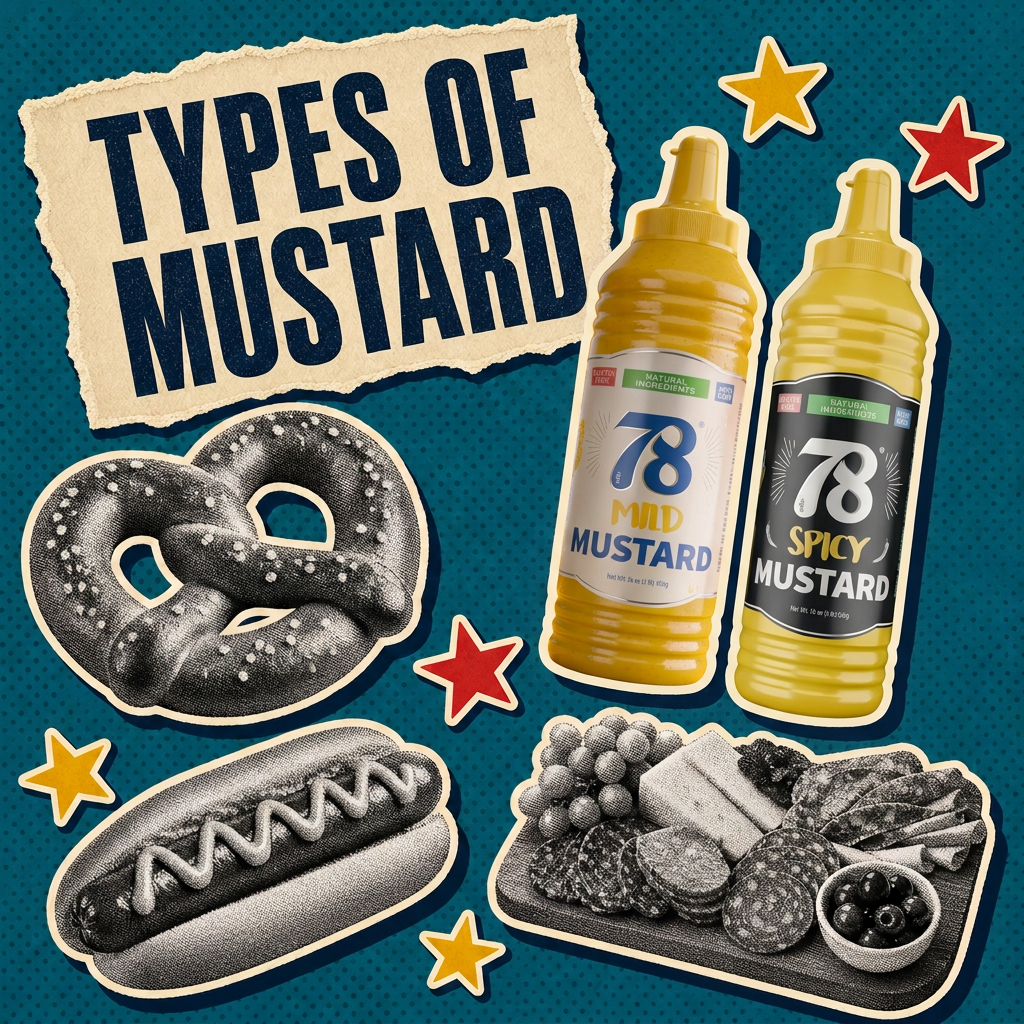
Stand in front of the mustard shelf and count. Thirty jars is normal. Now count the seeds involved: three. White, brown, and black mustard seed make every jar on that shelf. What changes is the grind, the liquid, and what got added afterward.
Once you can see those four dials, the aisle stops being thirty choices and becomes nine styles, each built for a job.
Why this matters
Three seeds, one aisle
White mustard seed (Sinapis alba, usually called yellow) is mild and round. Brown mustard seed (Brassica juncea) is hotter and sharper and is the base of most European and Asian styles. Black mustard seed (Brassica nigra) is hottest and rarely jarred. The seed sets the ceiling on heat; everything else decides how much of that ceiling you taste.
The four dials
Seed: white, brown, black, or a blend. Grind: smooth paste, coarse, or whole. Liquid: vinegar (tame, stable), wine or verjus (sharp, aromatic), water (maximum heat, short life), or beer. Additions: sugar, honey, peppers, herbs, spices. Serious Eats puts the two biggest dials together in one line: mustard made with yellow seeds and vinegar is on the mild end of the spectrum, while mustard made with brown or black seeds and cold water lands on the hot and spicy side.
The nine styles
- Yellow (American). White seed, vinegar, smooth. Heat 1. The ballpark classic. Put it on hot dogs, burgers, potato salad, deviled eggs.
- Spicy brown, also called deli mustard. Brown seed, coarser grind, vinegar. Heat 3. Earthy, a little gritty. Put it on pastrami, corned beef, roast beef, brats.
- Dijon. Brown seed, white wine or verjus (the juice of unripe grapes, the original recipe from Dijon, France), smooth. Heat 3. Sharp and clean. Put it in vinaigrettes, pan sauces, on chicken and pork.
- Whole grain. Seeds left whole or barely cracked, usually in vinegar or wine. Heat 2 to 3. Pops when you bite. Put it on sausages, cheese boards, in glazes for ham and salmon.
- German. Two branches: Bavarian sweet mustard (coarse, sugar or honey, made for weisswurst and pretzels) and medium-hot or Düsseldorf-style (brown seed, vinegar, sharper). Heat 2 to 4. Put it on brats, pretzels, schnitzel.
- English. White and brown seed, mixed with water, no vinegar to tame it. Heat 5. Sharp nose burn that fades. Put it on roast beef, ham, a sharp cheddar, in very small amounts.
- Chinese hot. Brown seed and cold water, often mixed fresh from powder. Heat 5. Instant, wasabi-like, gone in seconds. Put it on egg rolls, dumplings, sesame chicken.
- Honey mustard. A yellow or Dijon base with honey. Heat 1. Sweet first. Put it on chicken tenders, in dressings, on a ham sandwich.
- Pepper-hot yellow. White seed, vinegar, and real chili peppers in the spice blend. Heat 3. Warmth that builds and stays on the tongue rather than the nose. Put it on pretzels, brats, burgers, grilled sausage, pastrami. This is the style 78 Spicy Mustard belongs to.
The nine styles at a glance
| Style | Seed | Liquid | Heat | Texture | Put it on |
|---|---|---|---|---|---|
| Yellow | White | Vinegar | 1 | Smooth | Hot dogs, burgers |
| Spicy brown | Brown | Vinegar | 3 | Coarse | Pastrami, brats |
| Dijon | Brown | Wine/verjus | 3 | Smooth | Dressings, chicken |
| Whole grain | Mixed | Vinegar/wine | 2 to 3 | Whole seeds | Sausage, cheese, glazes |
| German | Brown/white | Vinegar | 2 to 4 | Coarse or smooth | Brats, pretzels |
| English | White + brown | Water | 5 | Smooth | Roast beef, ham |
| Chinese hot | Brown | Water | 5 | Smooth | Egg rolls, dumplings |
| Honey | White/brown | Vinegar + honey | 1 | Smooth | Tenders, dressings |
| Pepper-hot yellow | White | Vinegar + peppers | 3 | Smooth | Pretzels, brats, burgers |
Best mustard for the usual questions
Brats: German medium-hot or pepper-hot yellow. Hot dogs: yellow, or pepper-hot yellow if you want a kick. Pretzels: Bavarian sweet or pepper-hot yellow. Sandwiches: spicy brown for deli meat, Dijon for chicken and turkey. Salad dressing: Dijon, every time. Cheese boards: whole grain.
How to read a mustard label
Ingredients are listed by weight. If mustard seed is near the top, the jar is seed-rich and will taste like mustard. If vinegar is first by a wide margin and the list runs long, expect a thinner, sharper, more vinegar-forward mustard. Look for the sugar type, look for dyes (a real yellow mustard does not need one; the color is the seed), and look for a short list.
What 78 makes
Two yellow mustards, both six ingredients: water, white mustard seed, vinegar, sugar, salt, spices. 78 Yellow Mustard is the classic, style one on the list. 78 Spicy Mustard is style nine, with a blend of real peppers in the spices and no horseradish. Both are mustard-seed rich and less vinegar-forward than most yellow mustards, which is the difference you taste first. Non-GMO certified, gluten-free, no dyes.
The bottom line
Pick the seed for the heat ceiling, the liquid for how the heat behaves, and the grind for texture. Then buy the style for the food you actually eat, not the one that looks best on the shelf.