
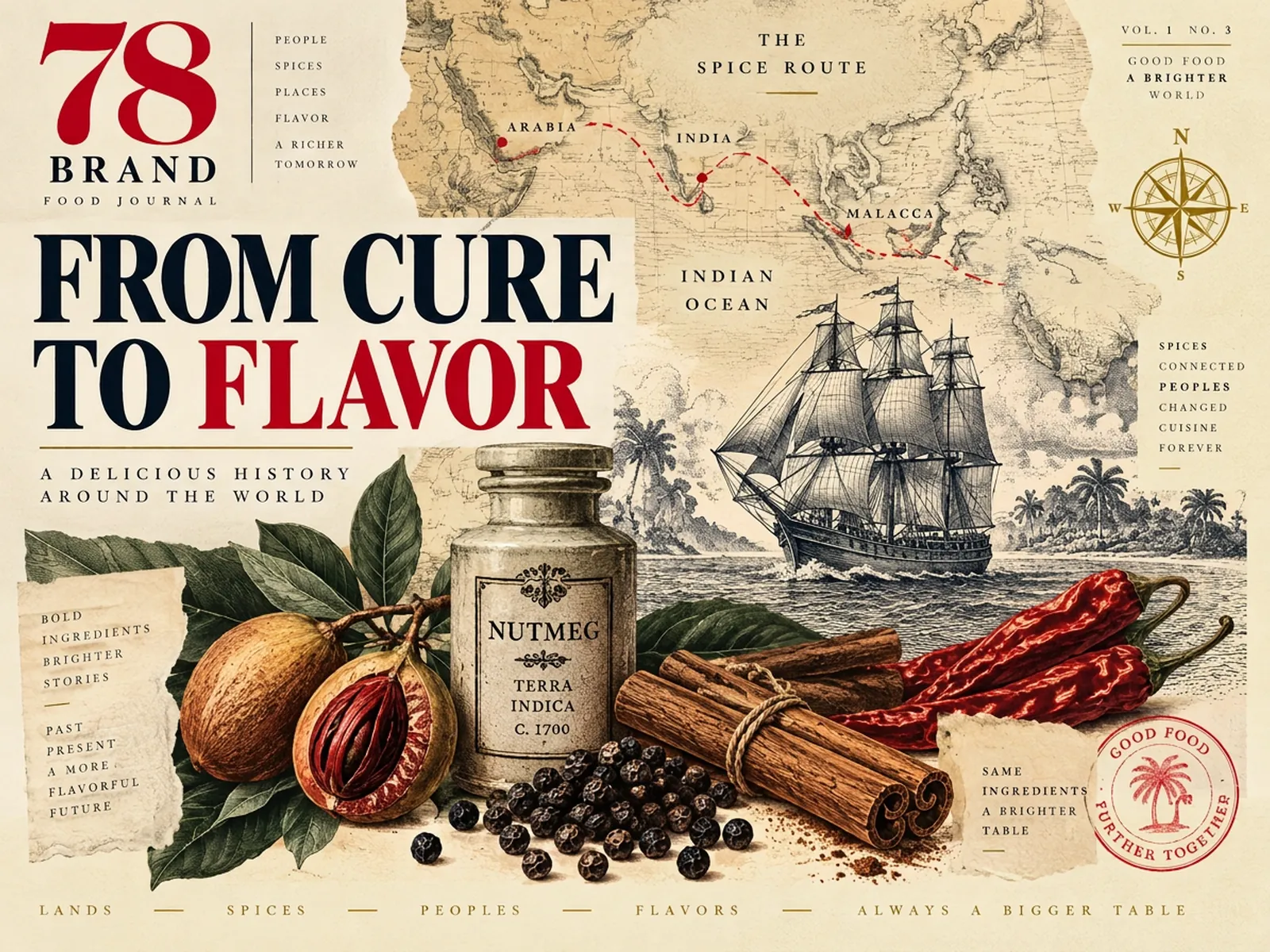
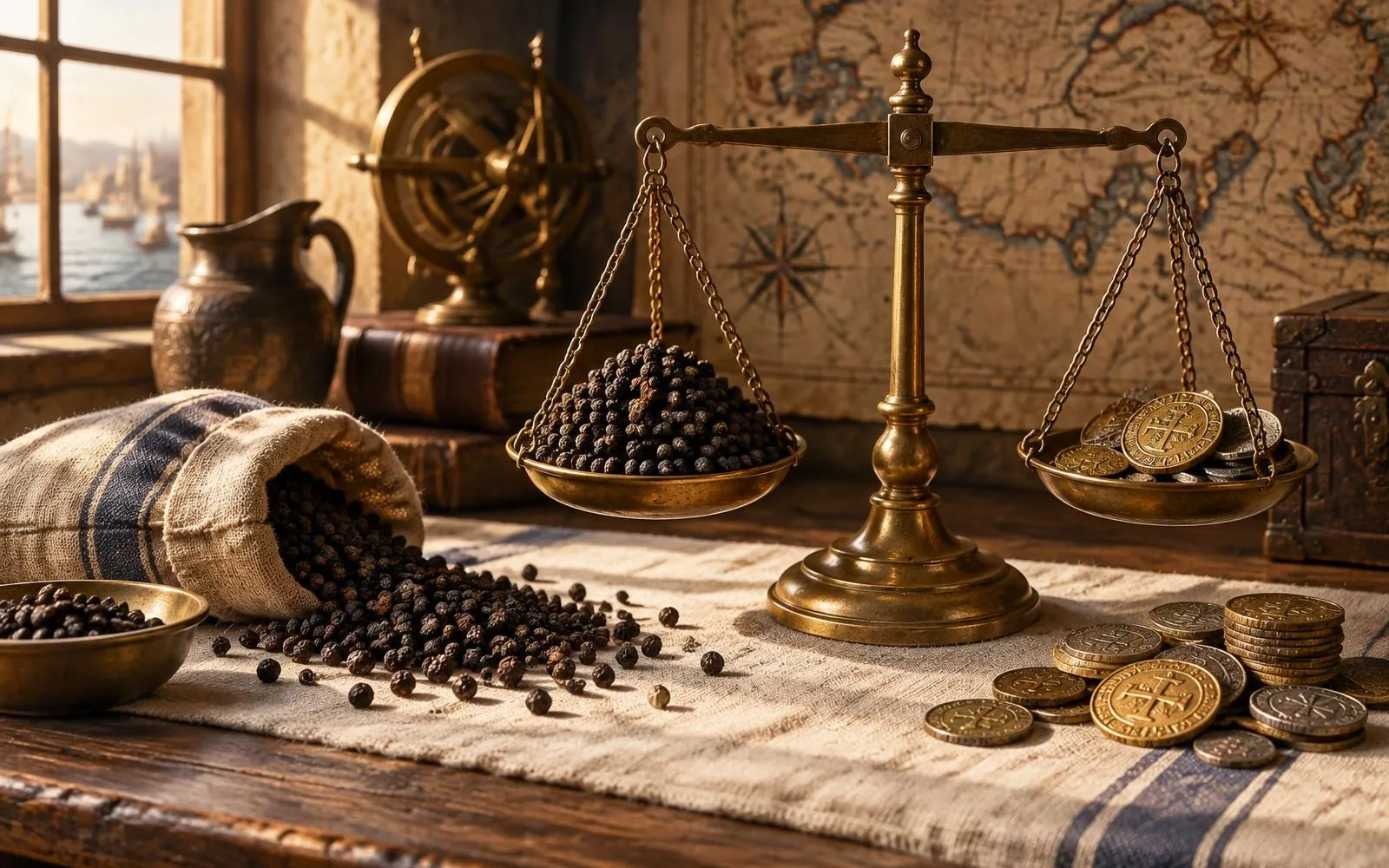
In the year 408, a Visigoth army surrounded Rome and named its price to leave. Five thousand pounds of gold. Thirty thousand pounds of silver. Four thousand silk tunics. And three thousand pounds of pepper.
That last line tells you most of what you need to know about the history of spices. For thousands of years, the dried seeds, barks, and roots in your kitchen drawer were not seasoning. They were medicine. They were money. They were the reason empires sent ships around the planet and fought wars over islands most people could not find on a map.
Here is how spices went from the pharmacy to the pantry. From cure to flavor.
The oldest seasoning on record
People were seasoning food long before anyone wrote about it. In 2013, archaeologists reported traces of garlic mustard seed inside cooking pots from northern Europe that were roughly 6,000 years old. Garlic mustard has almost no calories. The only reason to put it in a pot is flavor. As long as there has been cooking, it seems, there has been spice.
Where did spices come from?
Most of the classic spices grew in a narrow band of the tropics. Pepper came from the southwest coast of India. Cinnamon came from Sri Lanka, and its cousin cassia from southern China. Ginger and turmeric came from South and Southeast Asia. Cloves, nutmeg, and mace came from a handful of small volcanic islands in what is now eastern Indonesia, the islands Europeans would one day call simply the Spice Islands.
Chili peppers were the latecomers. They came from the Americas and would not reach the rest of the world until the 1500s.
That geography is the whole story in one sentence. Spices grew in a few places, and the people who wanted them lived everywhere else.
Medicine first
The earliest written records treat spices as medicine. The Ebers Papyrus, an Egyptian medical scroll from around 1550 BCE, collects more than 700 remedies, most of them made from plants, with garlic among the ingredients. Egyptians also used aromatic spices in embalming, preparing the dead with the most precious materials they had.
In India, the healing tradition known as Ayurveda built whole systems of medicine around turmeric, ginger, black pepper, and dozens more, and has used them for thousands of years. In the first century, the Greek physician Dioscorides catalogued hundreds of plant medicines in a book called De Materia Medica. Doctors across Europe and the Middle East relied on it for more than 1,500 years, and its pages are full of pepper, ginger, and cinnamon.
For most of history, nobody drew a hard line between food and medicine. What you ate was part of how you stayed well.
Rome's pepper habit
Rome loved pepper the way we love coffee. The only Roman cookbook that survives, credited to a gourmet named Apicius, calls for pepper in 349 of its 468 recipes. Roman ships learned to ride the monsoon winds across the Arabian Sea to India and back, and so much money flowed east for spices and silk that the writer Pliny the Elder complained about the drain on the empire's wealth.
So when Alaric's army sat outside the walls in 408 and asked for pepper next to the gold and silver, it was not a joke. It was a currency he knew Rome had in stock.
The middlemen years
After Rome fell, the spices kept moving, just through more hands. Arab and Persian merchants sailed the Indian Ocean and ran caravans overland. The spices reached Mediterranean ports, where the merchants of Venice and Genoa sold them on to the rest of Europe. Every handoff added a markup, and by the time pepper reached a kitchen in northern Europe it was a luxury good.
In medieval England, pepper was valuable enough that rents were sometimes paid in peppercorns. That is where the phrase "peppercorn rent" comes from, though today it means a rent so small it is only symbolic.
Medieval doctors still treated spices as medicine too. Under the theory of the four humors, foods were classified as hot, cold, wet, or dry, and warming spices were prescribed to balance a meal and keep the body in order.
Did people use spices to hide rotten meat?
No, and this is one of the most repeated myths in food history. The idea spread from a 1939 book on the English diet, and food historians have been knocking it down ever since. The logic does not hold up. Spices cost far more than meat, and the only people who could afford them were the people who could also afford fresh meat. Medieval cooks used spices for the same reasons we do: they tasted good, and people believed they were good for you.
Sailing for pepper
By the 1400s, European powers wanted to cut out the middlemen. That ambition launched the age of exploration.
In 1492, Christopher Columbus sailed west looking for a sea route to the spices of Asia. He never found pepper. What he found in the Caribbean was a fiery pod the local people had been cultivating for thousands of years, and he called it a pepper anyway. The name stuck, which is why a chili pepper and black pepper share a name while having nothing else in common.
In 1498, the Portuguese navigator Vasco da Gama sailed around the southern tip of Africa and reached Calicut on India's pepper coast. For the first time, Europeans had a direct sea route to the spices.
Then something remarkable happened. Chili peppers, carried by Portuguese traders, spread across the world within a few generations. The cuisines of India, Thailand, China, and Korea, which are hard to picture today without chilies, adopted them in the century after Columbus.
The nutmeg wars
No spice shows how far people would go better than nutmeg. For centuries, every nutmeg tree on Earth grew on the tiny Banda Islands, part of the Spice Islands.
The Dutch East India Company wanted all of them. In 1621, the Dutch took the Banda Islands by force, killing or enslaving most of the people who lived there. One island held out under English control: a speck of land called Run.
The standoff ended with the Treaty of Breda in 1667. Each side kept what it held. England kept a small colony it had seized in North America called New Amsterdam, and renamed it New York. The Dutch kept Run, and with it a monopoly on nutmeg. The swap is often told as "nutmeg for Manhattan." The reality was a peace deal, not a trade, but the fact that a nutmeg island sat on the scale against Manhattan says everything about what spices were worth.
Cure, the other meaning
There is a second kind of cure in the history of spices. Before refrigeration, people cured meat and fish to keep them from spoiling. Salt, smoke, and drying did most of that work. Spices added flavor and, it turns out, a little protection.
In 1998, Cornell biologists Jennifer Billing and Paul Sherman analyzed more than 4,570 traditional recipes from 93 cookbooks across 36 countries. They found that the hotter the climate, the more spice the recipes used. They also found that some spices, including garlic, onion, allspice, and oregano, inhibited every type of bacteria they were tested against. Their theory is that cultures in hot climates, where food spoils fastest, favored spices partly because those recipes kept people healthier. It is a theory, not a settled fact, but it gives the old word "cure" a second, very practical meaning.
From medicine chest to spice rack
Over the 1700s and 1800s, spices got cheap. European powers moved spice plants to plantations in new colonies, the monopolies broke, and prices fell. Pepper stopped being a luxury and became a table staple.
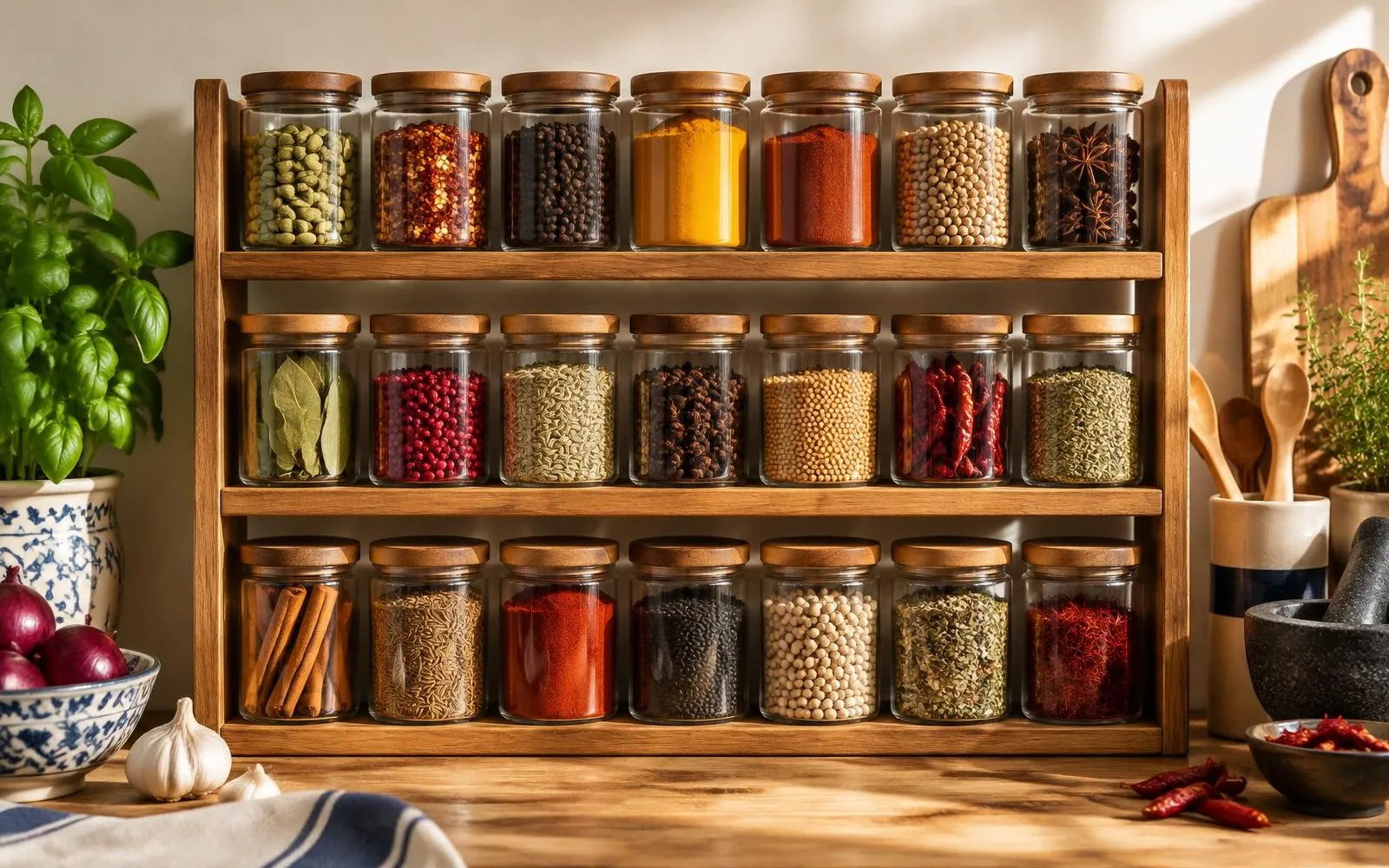
As spices became ordinary, their role shifted. Modern medicine drew a line between food and drugs, and spices landed on the food side. The medicine chest became a spice rack.
Now the story is turning again. Researchers are putting the old remedies to the test: turmeric, ginger, garlic, cinnamon, and chili peppers have all been studied in modern clinical trials. Some old reputations are holding up in specific ways. Many are not. We walk through what the research actually says in The 10 Healthiest Spices.
What this means for your kitchen
Every jar in your spice drawer is a survivor of this story. The pepper was once a ransom. The nutmeg was once worth a colony. The chili flakes crossed an ocean by accident on the way to somewhere else.
We think about that more than you might expect. Our 78 Spicy Ketchup and 78 Spicy Mustard run on real chili peppers, the spice Columbus found while looking for a different one. Our 78 Yellow Mustard is built on mustard seed, a spice people were cooking with 6,000 years ago. We did not invent any of it. We just try to use it well: short recipes, real ingredients, and respect for the thousands of years of cooks who figured it out first.
The 78 team believes the old cooks had it right: food and spices are part of how we take care of our bodies, and a lot of it starts with gut health. Spices were used for centuries not only to flavor food but to support the body, and we think they still belong in a daily diet. Know your spices, though. Every body processes food differently, so learn which ones work for you and which ones your body does not need.
- 78 Yellow Mustard is mustard-seed rich, and its yellow comes from the seed itself, not a dye.
- 78 Spicy Mustard gets its warmth from real peppers.
- 78 Spicy Ketchup layers real peppers over a 78% tomato base.
- 78 Original Ketchup keeps it simple: 78% tomatoes and real sugar.
78 spices are coming soon. We are bringing the same real-ingredient approach behind our ketchup and mustard to a line of spices, under the 78 Brand umbrella.
Frequently asked questions
What is the history of spices?
Spices have been used for at least 6,000 years. Ancient cultures in Egypt, India, and Greece used them first as medicine. Rome turned pepper into an everyday luxury, medieval merchants built a global trade around them, and the search for faster routes to spices launched the age of exploration. As prices fell in the 1700s and 1800s, spices shifted from medicine to flavor.
Where did spices come from?
Most classic spices came from tropical Asia. Pepper came from southwest India, cinnamon from Sri Lanka, ginger and turmeric from South and Southeast Asia, and cloves and nutmeg from the Spice Islands of eastern Indonesia. Chili peppers came from the Americas.
Why were spices so valuable?
They grew in only a few places, they traveled thousands of miles through many merchants who each took a markup, and people prized them as both medicine and flavor. Rare, hard to move, and in demand everywhere is a recipe for a very high price.
What was the spice trade?
The spice trade was the network of sea and land routes that carried spices from Asia to Africa, the Middle East, and Europe for more than 2,000 years. Arab, Persian, Indian, Chinese, Venetian, Portuguese, Dutch, and English traders all controlled parts of it at different times.
Did people use spices to hide spoiled meat?
No. It is a popular myth with no good evidence behind it. Spices cost more than meat, and the people who could afford spices could also afford fresh food.
Sources
- World History Encyclopedia, Pepper (Alaric's ransom; pepper in Apicius). https://www.worldhistory.org/Pepper/
- New World Encyclopedia, Ebers Papyrus. https://www.newworldencyclopedia.org/entry/Ebers_Papyrus
- Saul H. et al. (2013). Phytoliths in pottery reveal the use of spice in European prehistoric cuisine. PLOS ONE. https://journals.plos.org/plosone/article?id=10.1371/journal.pone.0070583
- Wikipedia, Run (island). https://en.wikipedia.org/wiki/Run_(island)
- Wikipedia, Treaty of Breda (1667). https://en.wikipedia.org/wiki/Treaty_of_Breda_(1667)
- Billing J., Sherman P.W. (1998). Antimicrobial functions of spices: why some like it hot. The Quarterly Review of Biology 73(1):3-49. https://www.journals.uchicago.edu/doi/abs/10.1086/420058
- Cornell Chronicle (1998), Food bacteria-spice survey shows why some cultures like it hot. https://news.cornell.edu/stories/1998/03/food-bacteria-spice-survey-shows-why-some-cultures-it-hot
- Culinary Lore, Were spices used to cover the taste of bad meat in the Middle Ages? https://culinarylore.com/food-history:spices-used-to-cover-taste-bad-meat/