
Why this even matters
The average American works through roughly three bottles of ketchup a year. The gap between a bottle sweetened with high fructose corn syrup and one that is not will not show up in a single meal, but it is one of the easiest low-effort swaps in the whole grocery cart, because you are buying the product anyway.
Three things worth skipping
- High fructose corn syrup. A 2022 systematic review and meta-analysis in Frontiers in Nutrition found HFCS intake was associated with higher C-reactive protein, an inflammation marker, compared with regular sugar. There is little reason to accept it when real sugar does the same job. (More on this in our full HFCS breakdown.)
- Artificial dyes. A good ketchup is red because tomatoes are red. If it needs a colorant to look like ketchup, that is a recipe question, not a shelf-appeal question.
- A long "just in case" ingredient list. Gums, catch-all flavorings, and several preservatives usually make up for the tomato the recipe left out. A short list is often the shortcut for reading the label.
What to actually look for
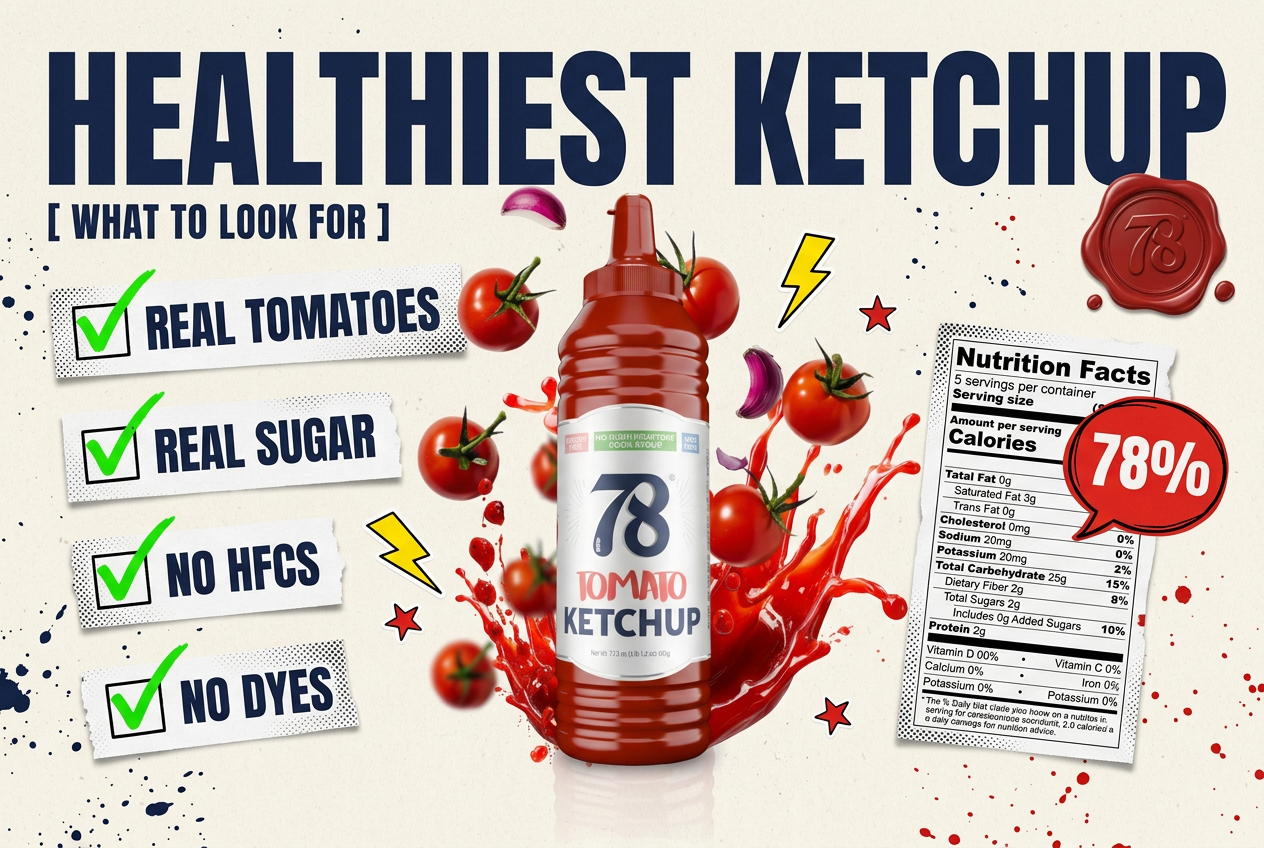
- High tomato content. The USDA Grade A standard for tomato ketchup sets a floor of at least 33% total solids by weight. More tomato than that means a thicker product with less room for filler. We build ours at 78% tomatoes, in a gluten-free ketchup made with 78% tomatoes.
- A sweetener you recognize. Real sugar over syrup. If you cannot pronounce the sweetener, that is information.
- A real Non-GMO certification covering the actual ingredients. Our mark covers the tomato paste, sugar, and spices, so the at-risk inputs are the ones being checked. See what a non-GMO ketchup looks like on the label. (Why that distinction matters.)
- Gluten-free, if that matters in your house.
The label test, in ten seconds
- Find the sweetener. Now you know what you are really buying.
- Scan the length. Long and full of words you would never keep in your pantry: keep looking.
- Check for a real certification, not just a front-of-label word like "natural" or "premium." Adjectives are not regulated, certifications are.
Bottom line
The healthiest ketchup is not a superfood. It is just the bottle that added the least. Real tomatoes, real sugar, no HFCS, no dyes, a short list. Apply that to any brand in any aisle.
The same standard applies when you want heat, which is how we built 78 spicy ketchup: real peppers on the same 78% tomato base.
Common questions
Is any ketchup actually healthy?
Ketchup is a condiment, not a health food. A tablespoon is not going to change your bloodwork. The useful question is which bottle adds the fewest junk inputs: real tomatoes, real sugar, no HFCS, no dyes, a short ingredient list.
Is HFCS-free ketchup better?
A 2022 systematic review and meta-analysis in Frontiers in Nutrition found high fructose corn syrup intake was associated with higher C-reactive protein, a marker of inflammation, compared with regular sugar. Since real sugar does the same sweetening job, there is little reason to accept HFCS in a bottle you buy three times a year.
Does more tomato mean healthier ketchup?
More tomato usually means less room for filler. The USDA Grade A standard for tomato ketchup sets a floor of at least 33% total solids by weight. Bottles built well above that floor tend to be thicker naturally and rely less on gums and starches for body.
What does Non-GMO certified mean on a ketchup label?
A real Non-GMO certification means the at-risk ingredients in the bottle, typically the tomato paste, sugar, and spices, have been traced and tested to a recognized non-GMO standard. That is different from a front-of-label word like natural or premium, which are not regulated.
Sources
- Frontiers in Nutrition (2022), systematic review and meta-analysis on HFCS and inflammatory markers. Read the paper.
- USDA Agricultural Marketing Service, Tomato Ketchup Grades and Standards. View the standard.