
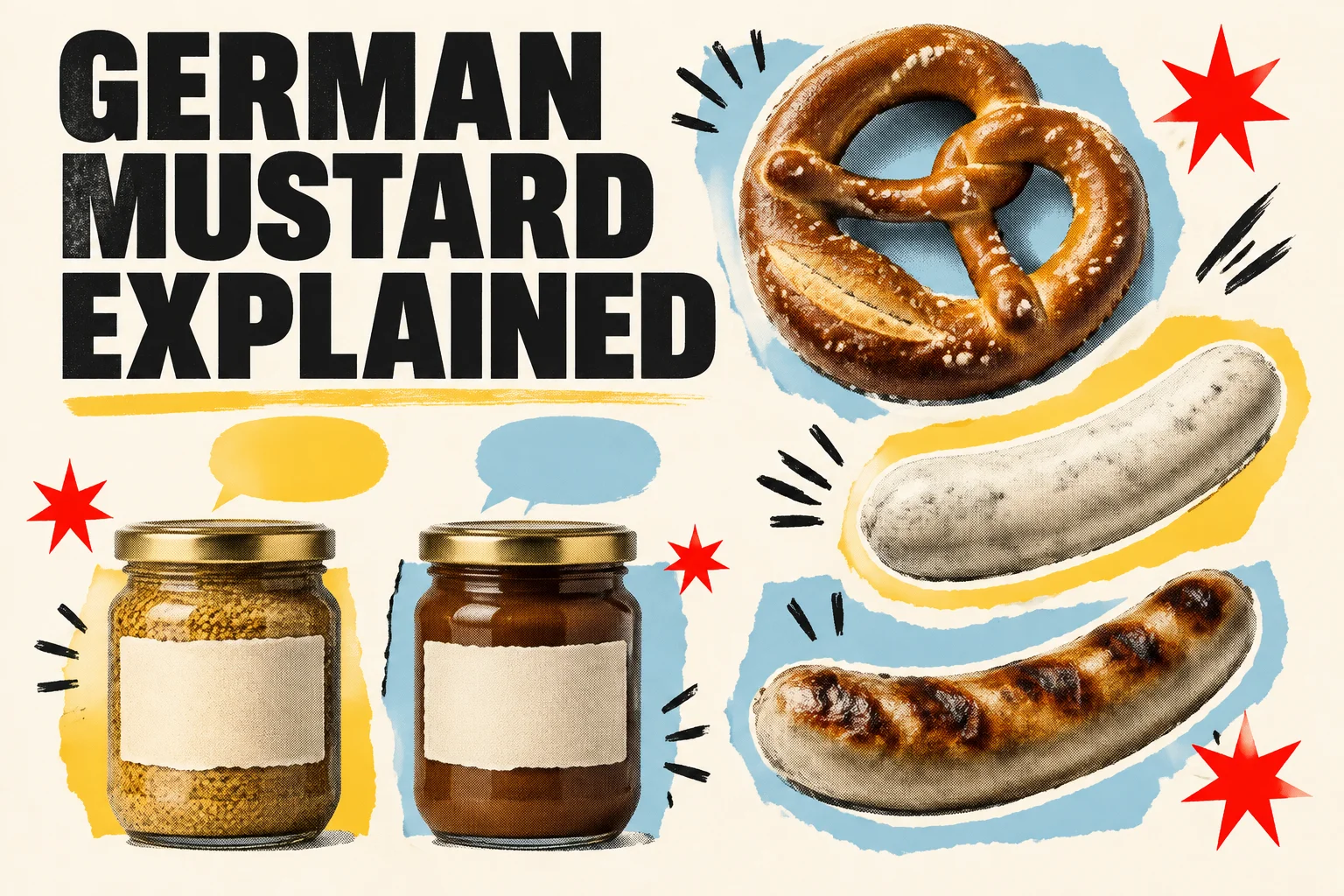
What counts as German mustard
Mustard seed, vinegar, water, salt, and very little else, ground to a texture between smooth and coarse. What defines the family is restraint. German mustard rarely reaches for extra flavors. It picks a spot on one scale, sweet to hot, and commits to it.
Bavarian sweet mustard
The soft end of the scale. Coarse-ground seed sweetened generously, traditionally eaten with weisswurst, the Bavarian white sausage, and just as good with a soft pretzel. If you think you dislike mustard, start here.
Dusseldorf mustard
The hot end. Smooth, dark gold, and seriously sharp, closer to English mustard than to anything in a squeeze bottle. It stands up to bratwurst, roast pork, and anything rich enough to need cutting.
The middle: medium senf
Most German tables keep a mittelscharf, a medium mustard, smooth and balanced, hotter than American yellow but far from Dusseldorf. It is the everyday jar.
German mustard vs Dijon
Both can be hot and smooth, but they split at the liquid. Dijon leans on wine for a sharper, more acidic profile. German styles lean on vinegar and seed, which reads rounder and earthier. Swap them in a pinch, but the sauce will tell on you.
No German mustard in the house?
The honest substitutes: for Dusseldorf, use English mustard or a pepper-built hot mustard. For medium senf, a good spicy mustard covers it. For Bavarian sweet, mix a coarse mustard with a spoon of honey and you are close.
The American cousin
Our own spicy mustard sits nearest the middle of the German scale, a yellow mustard base with real peppers for a warmth that builds and stays, made with aged spirit vinegar, Non-GMO certified, and gluten-free. Different passport, same philosophy: short recipe, real ingredients, pick a lane and commit.
Common questions
What is German mustard?
A family of mustards, called senf in German, defined by short recipes and a clear position on the sweet-to-hot scale: sweet Bavarian, medium mittelscharf, and hot Dusseldorf styles.
What is the difference between German mustard and Dijon?
Dijon is made with wine and reads sharper and more acidic. German mustard leans on vinegar and seed, which tastes rounder and earthier. They can substitute for each other in a pinch.
Is Dusseldorf mustard hot?
Yes. Dusseldorf-style is the hot end of German mustard, smooth and sharp, closer to English mustard than to American yellow.
What is a good substitute for German mustard?
For the hot styles, English mustard or a pepper-built hot mustard. For medium senf, a quality spicy mustard. For Bavarian sweet, stir honey into a coarse mustard.
Sources
- germanfoods.org, All About German Mustard. Read the overview.