
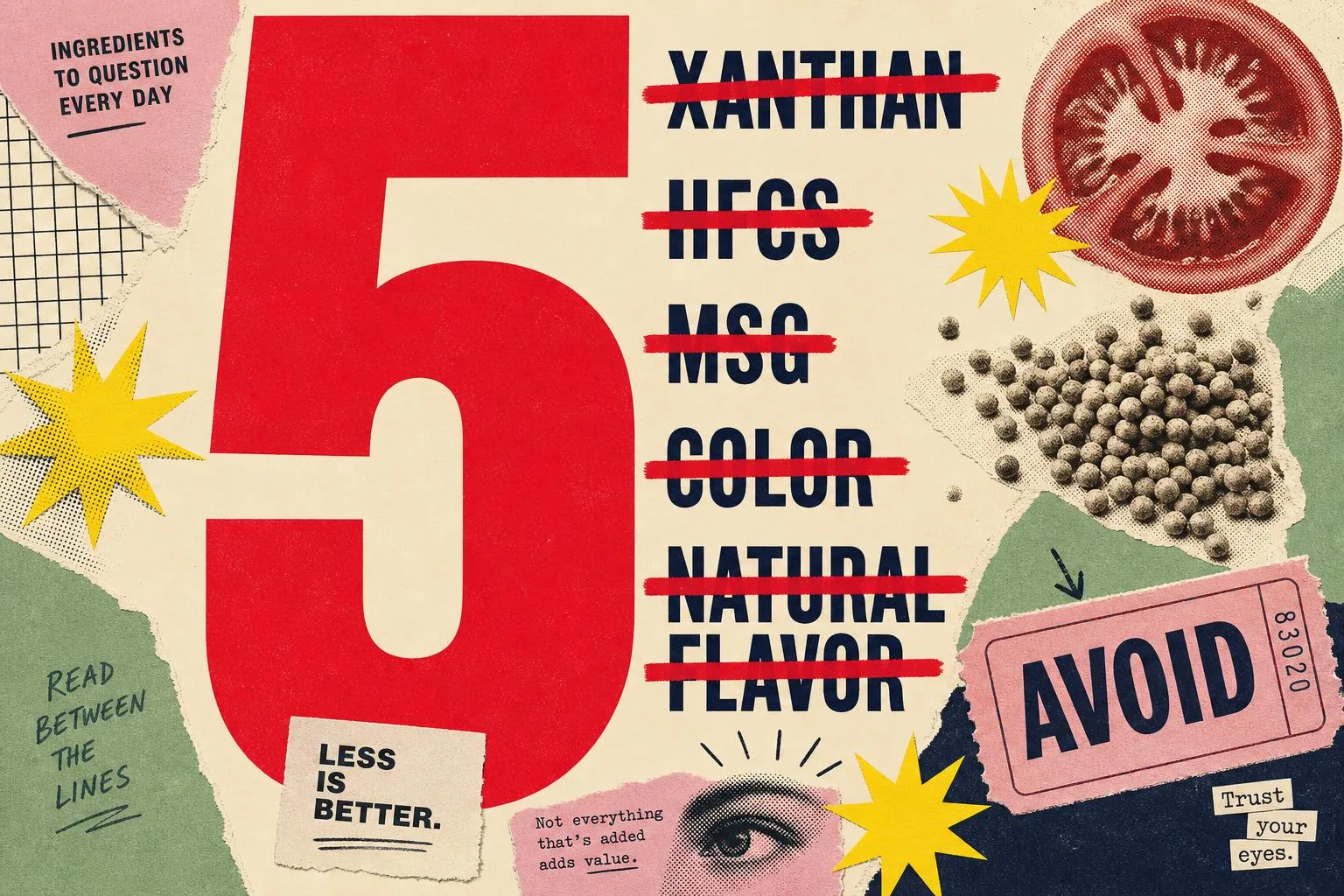
1. High fructose corn syrup
The number one ingredient swap in cheap ketchup. See our full HFCS breakdown.
2. Modified food starch
A thickener used when tomato content is too low to carry the bottle. If the recipe needed starch, the recipe was thin to start with.
3. Natural flavors (unspecified)
A regulatory catch-all that can hide dozens of compounds, often carried in soy or corn derivatives. If the source is not on the label, you do not actually know what you are eating.
4. Caramel color
Added to mask the dull brown of over-cooked or low-quality tomato paste. Real tomatoes do not need a dye job.
5. Sodium benzoate or potassium sorbate
Synthetic preservatives. Tomato acidity and vinegar already preserve ketchup at the right tomato content. These show up when the recipe is too thin to do it on its own.
What 78 puts in instead
Tomatoes, real sugar, vinegar, salt, spice. That is the whole list. The label is short on purpose.